Enter a verse or passage
1. Observe
2. Interpret
- What did this passage communicate to its original audience?
- What comes immediately before and after it?
- Which words or images control the meaning?
3. Theology
- What does this reveal about God, humanity, sin, grace, or redemption?
- How does it fit the Bible’s wider story?
- Where might faithful Christians interpret a detail differently?
4. Apply
- What truth should shape your thinking today?
- Is there an action, promise, warning, or example to respond to?
- Write one specific response you can practice this week.
5. Apologetics
- What question or objection might someone raise about this passage?
- What other Scripture should be considered before answering?
- How can you explain the passage accurately without overstating it?
1 Corinthians 13:4–7: love in practice
Use these sample notes to see how observation leads to interpretation and a practical response. They are an editorial example, not an answer generated by the tool or a transcript from the app.
Read 1 Corinthians 13 in the World English Bible, then compare the notes with the passage.
1. Observe
Verses 4–5 contrast patience and kindness with envy, boasting and self-seeking. Verse 6 pairs a refusal to celebrate wrongdoing with delight in truth. Verse 7 emphasizes love’s endurance.
2. Interpret
Read 12:31, 13:1–3 and 14:1 around these verses. Paul places love within a discussion of spiritual gifts and community life. The passage reaches beyond romantic relationships: impressive abilities do not make love unnecessary.
3. Theology
In 13:1–3, gifts, knowledge and costly actions are insufficient without love. The passage challenges a view of spiritual maturity measured only by conspicuous achievement.
4. Apply
One possible response: in my next group discussion, I will let another person finish before answering and ask one sincere clarifying question. This is a practice to try, not a new command quoted from Paul.
5. Apologetics
Does enduring mean approving wrongdoing? Verse 6 connects love with truth and rejects delight in wrongdoing. Do not use verse 7 to excuse harm or silence someone who needs help.
Question to explore next: How does verse 6 shape the way we read verse 7?
Build your own worksheet for this passage →
Context sources: 1 Corinthians 12 and 1 Corinthians 14. Compare study notes with Scripture and trusted teaching.
Keep studying here, or continue in the app
The free worksheet is ready to use above. If you want a guided explanation, enter “1 Corinthians 13:4–7” in Bible Copilot, choose Interpret, and ask: “How does verse 6 shape verse 7?”
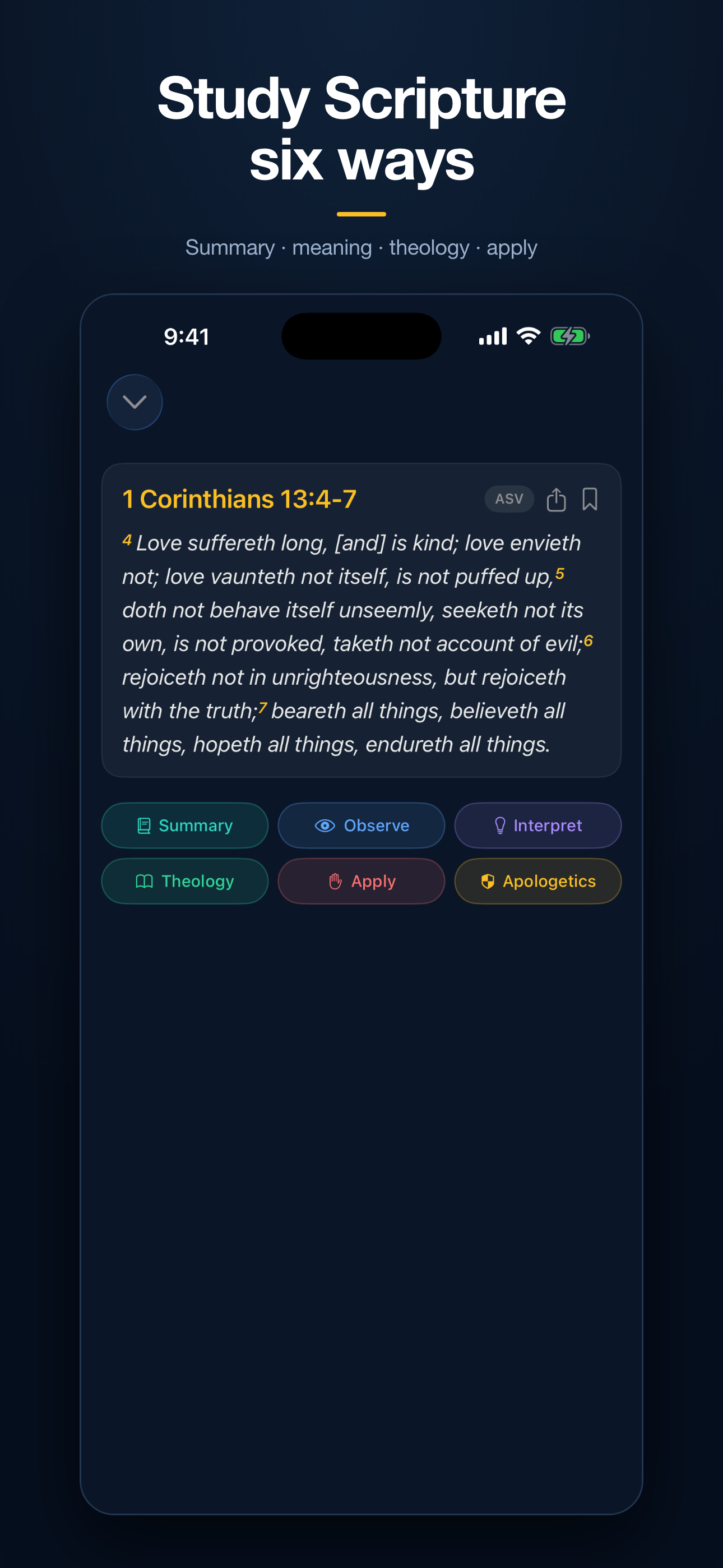
How to use this verse study worksheet
Read the passage more than once. Write observations before consulting explanations. Then compare your interpretation with the surrounding chapter, related passages, and trusted teachers. The tool provides a study structure; it does not replace Scripture, your church, or careful theological judgment.